

 Elder Scrolls Characters: Show yours off here!, The story, the weapons, the personalities, the lifestyle! Elder Scrolls Characters: Show yours off here!, The story, the weapons, the personalities, the lifestyle! |



  |
| Renee |
 Feb 26 2025, 08:34 PM Feb 26 2025, 08:34 PM
Post
#261
|
 Councilor  Joined: 19-March 13 From: Ellicott City, Maryland  |
HOLY [censored] NICE ADDITION, Kane!!!
  Yet another mod to geek over my Skyrim with! Yet another mod to geek over my Skyrim with! -------------------- |
   |

 
|
| Darkness Eternal |
Yesterday, 06:14 PM
Post
#262
|
 Master  Joined: 10-June 11 From: Coldharbour |
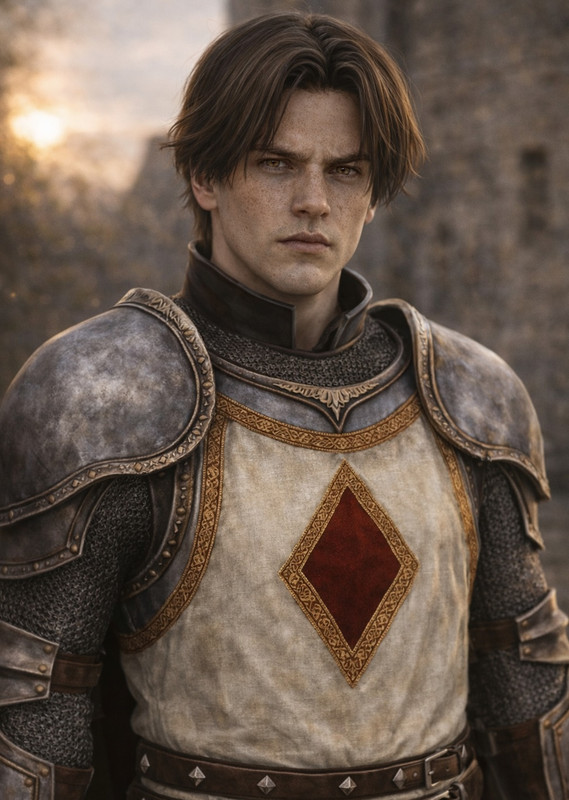
Here is my character some of you may have remembered. I have a good portion of his story (with his sister Daemyra) written in my files. He's my main character in both Oblivion and Skyrim. Draken was a name he later used, along with with Dacien, and other variations throughout his long years, but he was born with the name Decentius.
Since ESO is long before his time, I play as his ancestor in that game. This is his backstory, which barely scratches the surface of what happens in his life. Not sure if I'll post their revamped and revised story here, which is why I won't get into too much detail in his bio. His sister also has a character sheet, too! BIOGRAPHY Lord Decentius Decumus was born in 3E 109 to Lord Crassus and Lady Lassinia, where he was raised at Castle Decumus, secluded deep in the Nibenay Valley. He was educated as any Nibenese lord was meant to be. He learned how to fence, ride, and speak eloquently, traits that would come in handy later in life. In childhood he was loud, brash, forever tugging his younger sister Daemyra out of her books and into trouble: mock duels in the courtyard, half-serious boasts about riding out one day as a knight or soldier of the Empire was most of his days. When he was yet young, his mother Lassinia died under circumstances no one in the household would plainly explain, and the refusal of his father to speak of it changed Decentius. His father withdrew into a colder version of himself, and his sister lost her spark of innocence. The castle became a prison to Decentius, and he began to believe he would either suffocate or go mad there. He eventually made his choice. In early 3E 125, at sixteen, he decided to join the Knights of the Nine much to his father’s disapproval. He defied Crassus and set out on the Pilgrimage of the Nine, seeking admission to the Knights of the Nine. He did not find the spotless brotherhood he had imagined, as the Empire had been at war since 3E 121, when Potema of Solitude rose in rebellion to place her son Uriel III on the Ruby Throne, splitting Tamriel between their supporters and those of Empress Kintyra II and her uncles, Cephorus and Magnus. The order was fraying under the strain of the War of the Red Diamond, neutrality was fast becoming a thing of the past. Still, for a time, Decentius took the oaths. He wanted the Knights of the Nine to give him a rulebook for living. A name and title he could carry without shame. Decentius traded a life of comfort for a modest one. He began his journey as a servant; he was not a perfect squire, however. At first he drank too much, fought much more, and chased the comfort of maidens and questionable women when he could, earning the disapproval of older knights. Yet he learned quickly, and by late 3E 125 he was knighted after proving his valor in battle against a group of Orc marauders in the forests of Blackwood. By then the war had reached its hardest years. Potema and Uriel III held the allegiance of Skyrim, northern Morrowind, and High Rock, mustering Nordic and Breton hosts against the loyalist forces of Cephorus and Magnus. Inside the broken unity of the Knights, arguments about the rightful Emperor had become constant. Decentius, still young and eager to believe in lawful blood and just cause, was persuaded by his peers and local lords who insisted Uriel III was the last true heir. To Decentius, it did not feel like abandoning duty at first, for he felt he was obligated to. To him, he was defending legitimacy and birthright against what he had been taught to call decadence in the Imperial City and that was just as honorable as being a knight. When the chance came to ride with soldiers and Legion detachments under Uriel’s banner, Decentius left the Knights and enlisted, off to fight in the War of the Red Diamond. The war first took him into the contested territories of High Rock, and whatever romance he carried into the field did not last. The campaign became a long grind of sieges, raids and even betrayals. Decentius took part in it all. He had seen towns burned, fields salted and watched the space between “honor” and “orders” grow apart. It was the mud, hunger, cold nights, and death that made Decentius quietly begin to question what he had sworn himself to. After Cephorus reconquered High Rock, he was redeployed to Skyrim as Potema concentrated her power there. In 3E 127, Decentius fought at the Battle of Falconstar, serving among Potema’s forces in the passes of western Skyrim against King Magnus’ loyalist army. When news came that Uriel had been taken, Potema struck at Magnus’ weakest flank and forced the loyalists into retreat. It was a tactical victory that meant little. Soon after, word spread that the captured Uriel III had been killed en route to trial in the Imperial City, and that Cephorus had been crowned Emperor. With Uriel dead, Decentius was forced to take a long hard look at the side he had joined. Potema’s fury became legendary, as dark rumors began to spread even more than ever before: the Wolfqueen making pacts with Daedra, using necromancy, and using fallen soldiers as undead thralls. Decentius was left in wreckage of every decision he’d justified as necessary. After the circumstances of Kintyra Septim II’s death had shaken Decentus a bit, as did most of the Empire, it was what occurred after Uriel’s fall that changed him forever and was the final straw. He could not keep calling his cause a rightful. And he could no longer pretend his hands were clean. When Cephorus’ victory turned the tide and Potema’s allies began to defect, Decentius chose to do the same. Rather than die in a final stand for a cause he no longer believed in, he deserted the Wolf Queen’s forces. Under cover of confusion in Skyrim, he slipped away from camp, traded his armor for rags, and smuggled himself south with caravans and river traffic. The journey back to Cyrodiil was made in fear and disguise: ducking patrols, lying when he had to, living with the thought that if he died nameless on some back road, his sister Daemyra would never know what became of her brother. In those years he saw how survival often worked in the Empire: men who had sworn for Uriel III now swore for Cephorus, and in exchange were granted freedoms, charters, and degrees of autonomy like never before. If many could be forgiven for the sake of stability, perhaps one knight-turned-soldier could vanish into that same current, especially if he could use his noble birthright as leverage. Back in Cyrodiil, he did what he had once done as a hopeful boy: he walked the Pilgrimage of the Nine again, this time without ideals or romantic notions. He made the circuit as a man who had broken vows, supported a usurper, and helped feed a war with suffering of innocents. When he sought out what remained of the Knights of the Nine, he found no grand chapter-house waiting to judge him. Decentius was met with only scattered survivors and a wounded institution held together by memory and some sad sort of stubbornness. He returned with no ceremony. He knew deep down he didn’t join becase of valor or prestige, for even that had slipped the Knights of the Nine. He did so because he was desperate for something. Longing to belong and truthfully . . . he believed he had nowhere else to go. By 3E 131, Decentius was twenty-two, worn down, and unsure whether the boy who left Castle Decumus still existed in any meaningful sense. It was then that he began to look at coming home again. Toward his father and sister, but he dreaded it so. He left his sister when she was fourteen and has been gone six years, and had seldom written to her. He feared she has hardened in his absence, or that his father has shaped her into someone he would not recognize, or that she has simply learned to live without him. Standing between a dying Order and the home he abandoned, Decentius understood that any future he builds will have to be made from what remained, and he had to admit not much of “Decentius” was left. PERSONALITY & TRAITS Decentius grew up believing the world rewarded honorable conduct; then he spent his adolescence learning how easily that belief could be used against a man. Raised in comfort, he assumed stability was the natural state of things: good order, secure walls, problems solved by rank and law. As a boy he laughed easily, loved Daemyra fiercely, and clung to tales of knights and Divines with the absolute certainty. The mystery of his mother’s death did much to damage that belief. Watching Crassus hide truth behind politeness taught Decentius that authority could lie without consequence, even to its own blood. He turned that injury into resolve, convincing himself that if he served something holy and became "good" in a way no one could dispute, his private confusion would be redeemed. That became the entirety of him: duty, honor, faith. He was earnest; sometimes dangerously so, because he wanted to believe in clean lines between right and wrong. That same hunger made him easy to sway, especially when offered a story about rightful heirs and necessary violence. The War of the Red Diamond did not snap him into cynicism in a single moment, for it had layered him through the course of time. Each burned village and each senseless order added weight to Decentius, and he kept going long after his convictions began to rot, because admitting he was wrong, in his eyes, would mean admitting he threw away his vows and his family for nothing. After desertion and return to Cyrodiil, Decentius remained faithful to certain virtues; courage, protection of the weak, honoring commitment yet he distrusted institutions and grand causes. He was wary of leaders who spoke easily of sacrifice, and he was reluctant to pursue command even when he had the skill for it. Outwardly he carried himself as steady and controlled, with dry humor used as a shield; he listened more than he spoke and rarely offered his full opinion. Inwardly, he was haunted. Nightmares returned him to burning villages and the screams of people and horses, and he carried faces he could not forget. A rare bright point in his life was his friendship with Bastien, a Breton knight he came to rely on during the years of him being a knight. Bastien's calm counsel and unshaken convictions blunted the edge of Decentius' bitterness. Decentius leaned on him when thoughts of home were too painful to face directly, and Bastien became proof; quiet, stubborn proof that a man could walk through war without surrendering every good part of himself. Decentius preferred simple comforts: late-summer grapes from the Nibenay Valley, flatbread with oil or herbs, grilled or smoked river fish, and light Cyrodilic red wines taken with restraint. And the occasional sweetroll. He kept private habits; playing the lute late at night, reading histories and campaign accounts, tending horses, walking walls or riverbanks. He aimed his humor at pretension and bureaucracy and valued competence in those around him. When pressed about his mother's death, his desertion, or the years he spent serving a cause he no longer trusted, he closed off quickly. He was not without his flaws, either. He was defined as much by them as by his virtues. His need for structure and external validation made him vulnerable to manipulation; he craved rules he could follow and causes he could serve, which left him open to those who masked ambition for duty. He was slow to question authority when it wore the right symbols, a habit that cost him dearly during the war. Once committed, he dug in rather than admit error, mistaking stubbornness for integrity. This made him both reliable and dangerously inflexible; he would see a doomed course to its bitter end rather than abandon those who depended on him, even when retreat was the wiser choice. His guilt was a wound that would not close. He punished himself through denial; denying rest, denying comfort, denying connection. This made him poor company for himself and, at times, exhausting for others. He struggled to accept forgiveness or grace, interpreting kindness as either pity or a failure to see him clearly. He kept people at a distance not out of arrogance but out of a belief that he did not deserve their regard, and he was more comfortable offering help than receiving it. Pride remained threaded through his humility. He took any challenge to his competence as a questioning of his worth, and though he no longer sought glory, he could not bear the thought of being seen as weak or cowardly. This drove him to prove himself in ways that were often unnecessary and sometimes reckless. He was also prone to brooding, retreating into silence when hurt or overwhelmed rather than naming what troubled him. Bastien was one of the few who could pull him back from that edge, but even then, Decentius resisted being known too fully. RELATIONSHIPS: Decentius' relationship with his mother, Lassinia, remained frozen in time. She was warmth as any loving mother could be. Her death broke Decentius. He carried her as an ache he could not articulate, and any mention of her stiffened him immediately. With his father, Crassus, the bond was one of cold formality and resentment. Decentius viewed him as a man who was pragmatic and intelligent but coldly detached and at times emotionless. He left home as much to escape Crassus as to escape himself. Even as he planned to return home, the thought of facing his father filled him with a complicated mixture of defiance and shame; he wanted to prove he survived the choices he made, yet feared his father would see through to the deserter and oath-breaker beneath the armor. He knew reconciliation might be impossible, yet the need for his father's acknowledgment gnawed at him still. Daemyra was the one person Decentius allowed himself to love without reservation, though that love was now edged with fear. She was his anchor in youth, the quiet to his noise, the one who saw him as more than expectation. Six years of absence weighed on him like a stone. He imagined her changed; hardened by their father's hand, or grown distant, or worse, having forgotten him entirely. The possibility that she might look at him now and see only a stranger, or worse, a failure, terrified him more than any battlefield ever did. She was both his reason for wanting to return home and the reason he hesitated. PHYSICAL APPEARANCE Decentius was slightly tall, built with the long lines common to the Nibenese. More grace compared to his Colovian cousins. His hair was deep black and naturally wavy, kept longer than strict fashion suggested and often left tousled. At a distance he carried a patrician handsomeness: straight nose, high cheekbones, a sharp jaw that would have looked untouched in his youth. Up close, the War of the Red Diamond had left its marks, fine lines at the corners of his eyes, a cut along the brow, and the roughness of a young man who has slept in hard places. Like Daemyra, he had freckles scattered lightly across the bridge of his nose and cheeks. His eyes were a clear, thoughtful light brown that shifted with the light, and they betrayed him when he listened; his attention could sharpen so intensely it was sometimes taken as intrusive. SKILLS & TALENTS Decentius’ upbringing at Castle Decumus provided thorough noble training: court etiquette, diplomacy, and the practiced reading of people and documents. Watching Crassus bargain with merchants, magistrates, and the East Empire Company taught him how posture and patience shape an exchange. He was highly literate and comfortable with contracts, military orders, and basic legal texts, and he was competent with ledgers, manifests, and supply. His education also included strong horsemanship, solid fundamentals with the blade, experience with genteel hunting and fieldcraft, and working knowledge of the Nine Divines and the Imperial Cult. As a squire and later as a campaigning soldier, these foundations hardened into practical ability. He became an accomplished swordsman and shield-user, trained in cavalry tactics, small-unit command, and maintaining mail and plate under field conditions. Campaigns in High Rock and Skyrim taught him siegecraft by necessity, cold-weather survival, foraging, battlefield awareness, and the grim particulars of ambushes, night raids, and fighting in broken terrain. He learned rough field medicine and basic restorative practice like binding wounds and fending off infection when he could. He learned to draw on what was available in a camp rather than any formal healer’s hall. He had an eye for maps and routes as well. His desertion forced him to learn deception well enough to pass among commoners, lie at checkpoints, and move across borders without drawing attention. He also picked up the ordinary pastimes of soldiers, like telling stories, playing cards and dice. He took up learning to play the lute and drum. He was not a battlemage, but he possessed modest talent for Destruction: basic fire spells (flames, scorching blasts, and the occasional crude firebolt) used in close support of his sword work. He was no professional mage; however, in need he could ignite oil, set a shield wall alight, or use fire as both tool and weapon, making him more adaptable than a purely mundane knight. This post has been edited by Darkness Eternal: Yesterday, 06:26 PM -------------------- And yet I am, and live—like vapours tossed.
I long for scenes where man hath never trod A place where woman never smiled or wept There to abide with my Creator, God, And sleep as I in childhood sweetly slept, Untroubling and untroubled where I lie The grass below—above the vaulted sky.” |
|
|
|
| Acadian |
Yesterday, 10:15 PM
Post
#263
|
 Paladin  Joined: 14-March 10 From: Las Vegas |
Wonderfully rich detail in what has shaped Decentius. If he ever returns home, I wonder what he will find?
-------------------- |
|
|
|
| Renee |
Today, 03:43 PM
Post
#264
|
|
Councilor Joined: 19-March 13 From: Ellicott City, Maryland |
Pretty sure I remember Draken from reading part of his story long ago in the fan fiction section, way back when I was new here to Chorrol. I like that he disappointed his father by joining Knights of the Nine. Dad seems a piece of work in this biography, like not any sort of positive figure to aspire toward.
-------------------- |
|
|
|
|
1 User(s) are reading this topic (1 Guests and 0 Anonymous Users)
0 Members:

|
Lo-Fi Version | Time is now: 8th February 2026 - 07:29 PM |
Invision Power Board
v2.1.7 © 2026 IPS, Inc.
Licensed to: Chorrol.com

